Conservative Management of Stage 2–3 IVDD in Dogs: How Rehabilitation Can Help
Intervertebral
Disc Disease (IVDD) can be a frightening diagnosis for dog owners, particularly
when their dog suddenly develops back pain, weakness or difficulty walking.
While some dogs require surgery, others with Stage 2–3 IVDD may be suitable for
conservative management under veterinary supervision.
With the
right combination of veterinary care, strict rest and a carefully tailored
rehabilitation programme, many dogs can make meaningful improvements in their
comfort, strength and mobility.
At
Aquapaws Canine Rehabilitation & Fitness Centre, we understand that every
dog's recovery is different. Our goal is to support each dog through their
rehabilitation journey while working closely with their treating veterinarian.
What Is IVDD?
Intervertebral Disc Disease occurs when the discs between the vertebrae of the spine degenerate,
bulge or rupture. This can place pressure on the spinal cord and surrounding nerves, resulting in
pain, weakness, reduced coordination or paralysis.
IVDD is particularly common in breeds such as Dachshunds, French Bulldogs, Corgis, Beagles and
other chondrodystrophic breeds, although any dog can be affected.
The severity of IVDD varies, and treatment recommendations depend on the dog's neurological
function, pain levels, imaging findings and clinical progression.
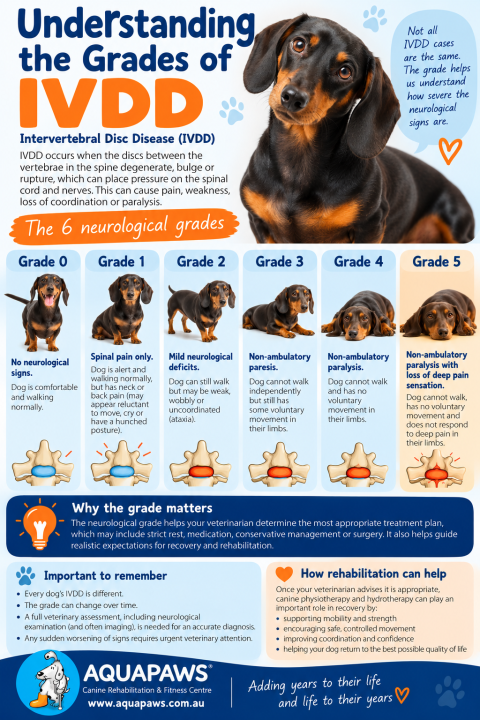
Understanding Stage 2 and Stage 3 IVDD
IVDD is
often graded according to the severity of a dog's neurological signs. Although
grading systems can vary between veterinary practices, a commonly used scale
describes:
- Stage 2: The dog can usually walk but has spinal pain, weakness or reduced coordination. Their gait may be wobbly or unsteady.
- Stage 3: The dog cannot walk independently but retains some voluntary movement in the affected limbs.
These
stages are important because they help guide treatment decisions and establish
realistic rehabilitation goals.
Important: Dogs with Stage 3 IVDD should
receive prompt veterinary assessment. Conservative treatment may be considered
in selected cases, but some dogs benefit from surgical decompression. A
veterinarian must determine the most appropriate approach.
Any
sudden deterioration, worsening weakness, loss of movement or difficulty
urinating requires urgent veterinary reassessment.
What Is Conservative Management of IVDD?
Conservative management is a non-surgical approach designed to allow the affected spinal
structures to settle while protecting the spinal cord from further injury.
It generally involves several components.
1. Strict Rest and Activity Restriction
One of the most important parts of conservative IVDD management is strict rest, particularly
during the initial recovery period. Although it can be difficult to keep an active dog quiet, excessive movement may aggravate the
affected disc and delay recovery. Your veterinarian will advise how long rest should continue, often for several weeks depending on
the individual case.
During this period, management may include:
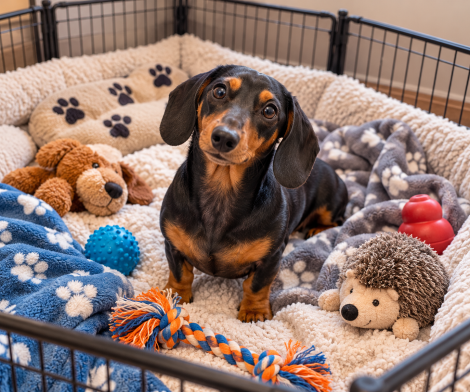
- Resting in a secure crate or small, confined area.
- Avoiding stairs, jumping, running and rough play.
- Carrying the dog when appropriate and safe.
- Using a harness and supporting sling when advised for essential toileting.
- Preventing access to slippery floors and furniture.
Rest does not mean that a dog should be left without appropriate nursing care. Dogs with reduced
mobility may require assistance with repositioning, bedding, hygiene and toileting.
2. Veterinary Pain Relief and Medication
Pain management is an essential part of conservative treatment. Your veterinarian may prescribe
appropriate medications to manage pain, inflammation or muscle spasms. Medication must be given exactly as directed. Never introduce human pain medication or change
prescribed doses without veterinary advice. Dogs that cannot walk independently may also require bladder monitoring and assistance with
toileting. Incomplete bladder emptying can lead to complications, so your veterinary team should
demonstrate the correct technique if manual bladder expression is required.
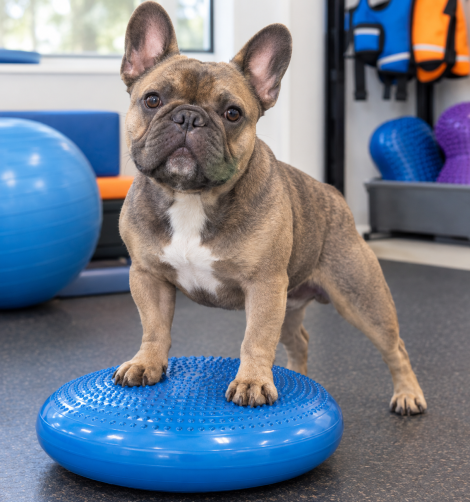
How Can Rehabilitation Help Dogs with Stage 2–3 IVDD?
Once your veterinarian considers rehabilitation appropriate, a structured programme can help
support recovery while protecting the healing spine.
Rehabilitation is not simply about getting a dog walking again. It involves assessing the
dog's current abilities, identifying areas of weakness and gradually introducing suitable
activities as neurological function improves.
At Aquapaws, rehabilitation plans are tailored to each dog's clinical presentation, comfort,
mobility and stage of recovery.
1. Veterinary Physiotherapy
Veterinary physiotherapy can play an important role in the recovery of dogs affected by IVDD.
Depending on the dog's condition and veterinary recommendations, treatment may include:
- Gentle, controlled passive range-of-motion exercises.
- Appropriate positioning and supported standing.
- Weight-bearing activities when safe.
- Exercises to encourage limb awareness and coordination.
- Gradual strengthening as voluntary movement improves.
- Gait assessment and progression towards independent walking.
For dogs with Stage 2 IVDD, physiotherapy may focus on improving coordination, limb placement,
strength and confidence when walking.
For dogs with Stage 3 IVDD, the initial focus may be on maintaining joint mobility, supporting
appropriate muscle activity, encouraging safe weight-bearing when possible and assisting
functional movement.
Exercises must be selected carefully. Aggressive stretching, spinal manipulation or activities
that place excessive strain on the back are not appropriate.
2. Underwater Treadmill Rehabilitation
An underwater treadmill can be a valuable rehabilitation tool for selected dogs recovering from
IVDD. The buoyancy provided by water can reduce the amount of body weight the dog needs to support,
while the resistance of the water provides opportunities for controlled movement.
Potential benefits include:
- Encouraging a more controlled walking pattern.
- Supporting limb movement and coordination.
- Helping develop muscle strength and endurance.
- Providing opportunities for controlled weight-bearing.
- Allowing the rehabilitation team to observe limb placement and gait.
3. Hydrotherapy and Swimming
Swimming may help improve conditioning and muscle activity in selected dogs, but it is not
automatically suitable for all dogs with IVDD. A dog that cannot maintain a safe body position, has poor limb control or cannot keep its airway
safely above water may be at risk during swimming. For this reason, swimming should never be used as an unsupervised exercise for a dog with
significant neurological deficits. The timing and suitability of hydrotherapy depend on the dog's neurological status, comfort,
skin condition, ability to participate safely and veterinary advice.
4. Home Rehabilitation Exercises
What happens between appointments is just as important as the work completed during a
rehabilitation session. Your rehabilitation professional may prescribe simple home exercises to support your dog's
progress. These will change as your dog improves.
Depending on the stage of recovery, home activities may include supported standing, controlled
weight shifting, assisted limb movements or short, carefully managed walks. Not every dog will be ready for all of these activities. Owners should only perform exercises
that have been demonstrated and approved for their individual dog. Keeping a record of changes in walking ability, limb movement, toileting and comfort can help the
veterinary team assess progress.
What If My Dog Cannot Walk?
A Stage 3 IVDD diagnosis can feel overwhelming, particularly when your dog has suddenly lost the
ability to walk independently. However, an inability to walk does not necessarily mean that recovery is impossible.
Some dogs regain mobility with conservative management, while others require surgery and
subsequent rehabilitation. Outcomes depend on factors such as the severity of spinal cord injury,
neurological function, pain, bladder control and response to treatment.
For dogs with significant mobility limitations, nursing care is particularly important. This may
include:
- Maintaining clean, dry and well-padded bedding.
- Regularly checking the skin for pressure sores.
- Repositioning the dog as instructed.
- Monitoring bladder and bowel function.
- Keeping the dog comfortable and maintaining good hygiene.
- Following a veterinarian-approved rehabilitation plan.
Progress may initially be subtle. Small improvements in voluntary limb movement, supported
weight-bearing or coordination can be meaningful, but they should always be interpreted in the
context of a veterinary neurological assessment.
How Long Does Recovery Take?
There is no single recovery timeline for IVDD. Some dogs with milder neurological deficits improve over several weeks, while dogs with more severe spinal cord involvement may require months of nursing care and rehabilitation.
Progress can be gradual and may not follow a straight line. A dog might show improvements in limb movement before being able to stand independently, or demonstrate better strength before their walking pattern becomes coordinated. Regular veterinary reviews and rehabilitation reassessments help determine when activities can be safely progressed. It is important not to rush recovery. Returning to unrestricted activity too soon may increase the risk of further injury.
Why an Individualised Rehabilitation Plan Matters
No two dogs recover from IVDD in exactly the same way. A successful rehabilitation programme takes into account the dog's
neurological grade, affected limbs, pain levels, muscle condition, temperament, home environment
and response to treatment.
At Aquapaws, we work towards practical goals that reflect each dog's needs, whether that
means improving walking confidence, developing strength, maintaining mobility or supporting a dog
that needs ongoing assistance.
We also recognise the importance of supporting owners throughout the process. Caring for a dog
with IVDD can be physically and emotionally demanding, particularly when assistance with
toileting and daily activities is required.
Clear guidance, realistic expectations and regular communication with the veterinary team can
make the recovery journey more manageable.
Helping Your Dog Take the Next Step
A diagnosis of Stage 2–3 IVDD does not mean that every dog's future will look the same. With
appropriate veterinary treatment, careful activity restriction and a rehabilitation programme
tailored to their abilities, some dogs can make encouraging progress.
The most important first step is to ensure your dog receives an appropriate veterinary assessment
and that any rehabilitation is introduced at the right time. At Aquapaws Canine Rehabilitation & Fitness Centre , we provide individualised canine
rehabilitation and hydrotherapy services, working alongside your veterinarian to help dogs
recover function, build strength and achieve the best possible quality of life.
If your dog has been diagnosed with IVDD, speak with your veterinarian about whether a referral
for rehabilitation is appropriate.
Every dog is different. This article is intended for general educational purposes and does not
replace veterinary assessment, diagnosis or treatment. Conservative management should only be
undertaken with veterinary guidance, particularly in dogs that cannot walk independently.