Rehabilitation After Spinal Surgery: What Recovery Really Looks Like
Spinal
surgery can be life-changing for dogs affected by conditions such as
Intervertebral Disc Disease (IVDD), fibrocartilaginous embolism (FCE), spinal
trauma, or degenerative spinal disorders. While surgery may relieve pressure on
the spinal cord or stabilise the spine, it is only the beginning of the
recovery journey.
One of
the biggest misconceptions is that surgery alone will restore normal function.
In reality, rehabilitation plays a crucial role in helping dogs regain
strength, coordination, mobility, and confidence.
Every Recovery Is Different
No two dogs recover at the same rate. Some dogs may be standing and taking assisted steps within
days, while others may take weeks or even months before significant improvements are seen.
Recovery depends on several factors, including:
- The severity of the spinal injury
- How quickly surgery was performed
- The dog's age and overall health
- Pre-existing muscle loss or weakness
- The level of neurological function remaining after surgery
Patience is often one of the most important parts of the process.
The First Few Weeks
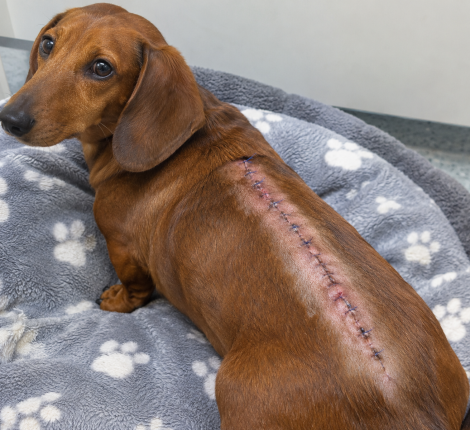
Immediately after surgery, strict confinement is usually required to protect the surgical site
and allow healing to begin.
During this period, many dogs may:
- Be unable to walk independently
- Drag their paws or knuckle over
- Have poor balance and coordination
- Need assistance standing
- Require bladder management
- Tire very quickly
While this can be confronting for owners, it is often a normal stage of recovery.
Why Rehabilitation Matters
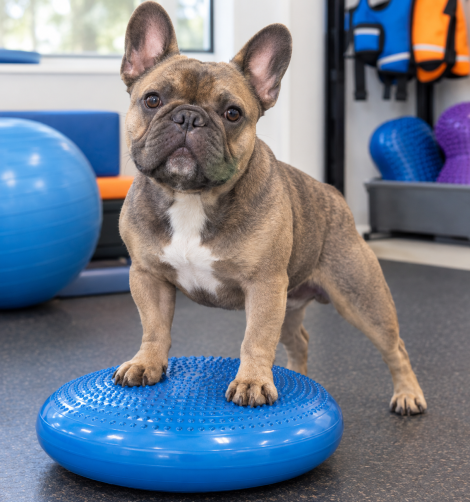
Following spinal surgery, muscles begin to weaken surprisingly quickly. Joint flexibility
decreases, balance is affected, and movement patterns can become abnormal.
A structured rehabilitation program helps by:
- Rebuilding muscle strength
- Improving balance and coordination
- Encouraging correct movement patterns
- Maintaining joint flexibility
- Reducing compensatory strain on other limbs
- Maximising neurological recovery
Most importantly, rehabilitation helps dogs regain confidence in using their bodies again.
The Benefits of Underwater Treadmill Therapy
The
underwater treadmill is one of the most valuable tools in spinal
rehabilitation. The
buoyancy of the water reduces the amount of weight placed on the limbs, making
movement easier and safer. At the same time, the resistance of the water
encourages muscle strengthening and improves limb awareness.
Benefits
include:
- Assisted walking practice
- Improved limb placement
- Increased muscle strength
- Enhanced coordination
- Reduced impact on joints
- Greater confidence during movement
For many
spinal patients, the underwater treadmill provides opportunities to practise
walking before they are capable of doing so on land.
Small Improvements Matter
Recovery after spinal surgery is rarely a straight line.
Progress may look like:
- Standing for a few seconds longer
- Taking an extra step
- Improved paw placement
- Better balance
- Increased stamina
- Greater independence
These small milestones often add up to significant improvements over time.
Success Takes a Team
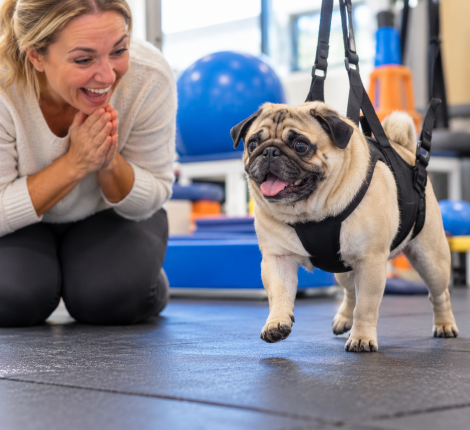
The best outcomes occur when veterinarians, rehabilitation professionals, and owners work
together.
A successful recovery typically includes:
- Veterinary monitoring
- Rehabilitation therapy
- Home exercise programs
- Weight management
- Appropriate pain management
- Ongoing reassessment and progression
The Bottom Line
Spinal
surgery may repair the damage, but rehabilitation helps dogs learn how to move
again.
Recovery
is often measured in small steps rather than giant leaps. With patience,
commitment, and the right rehabilitation program, many dogs can regain
mobility, independence, and quality of life that their families never thought
possible.
Because
recovery after spinal surgery isn't just about healing—it's about rebuilding
strength, confidence, and movement one step at a time.